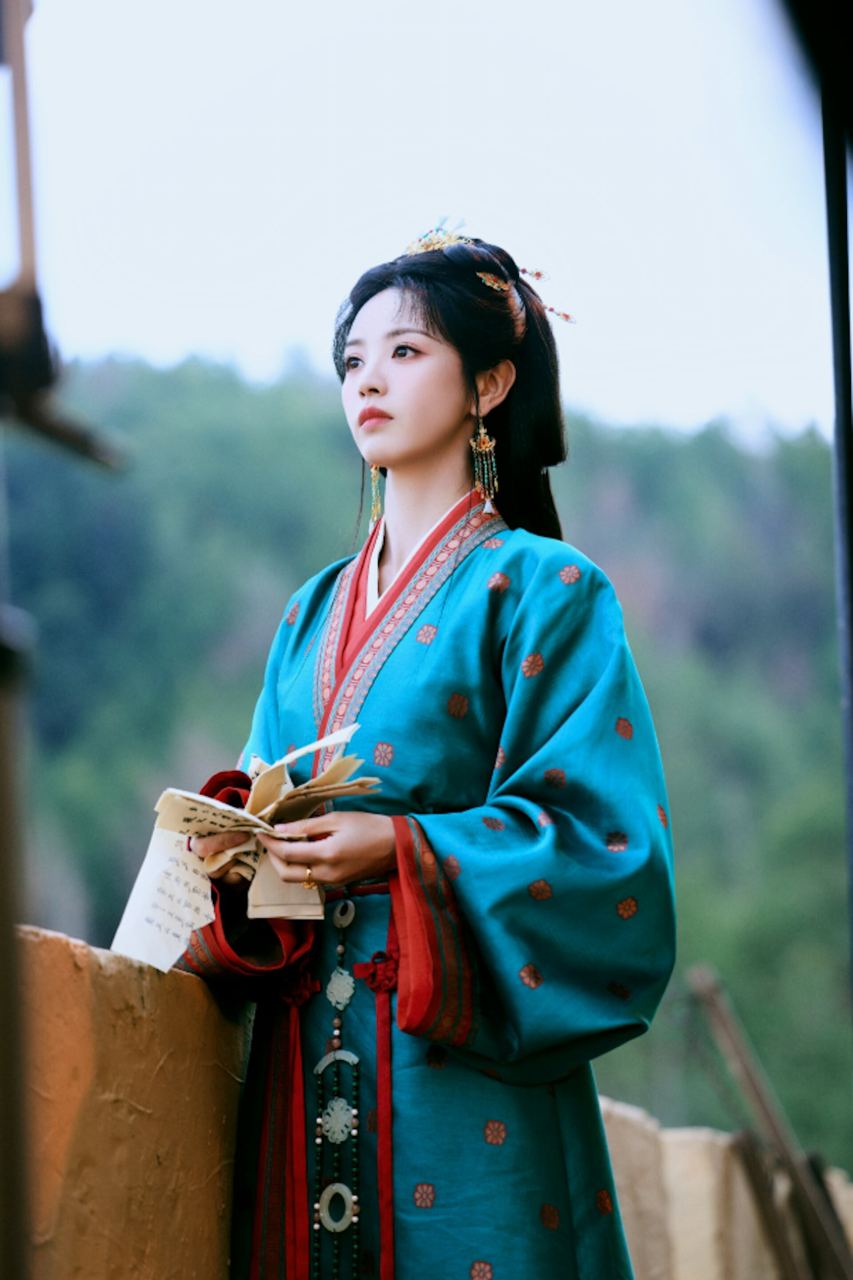
耕者有其田 Land to the Tiller, a painted story map
Who should own the land: the lord with the deed, or the people who work it?
A 2026 Chinese drama asked it. California answered it for Asian immigrants in 1913.
You don't need to have seen the show. Start anywhere.
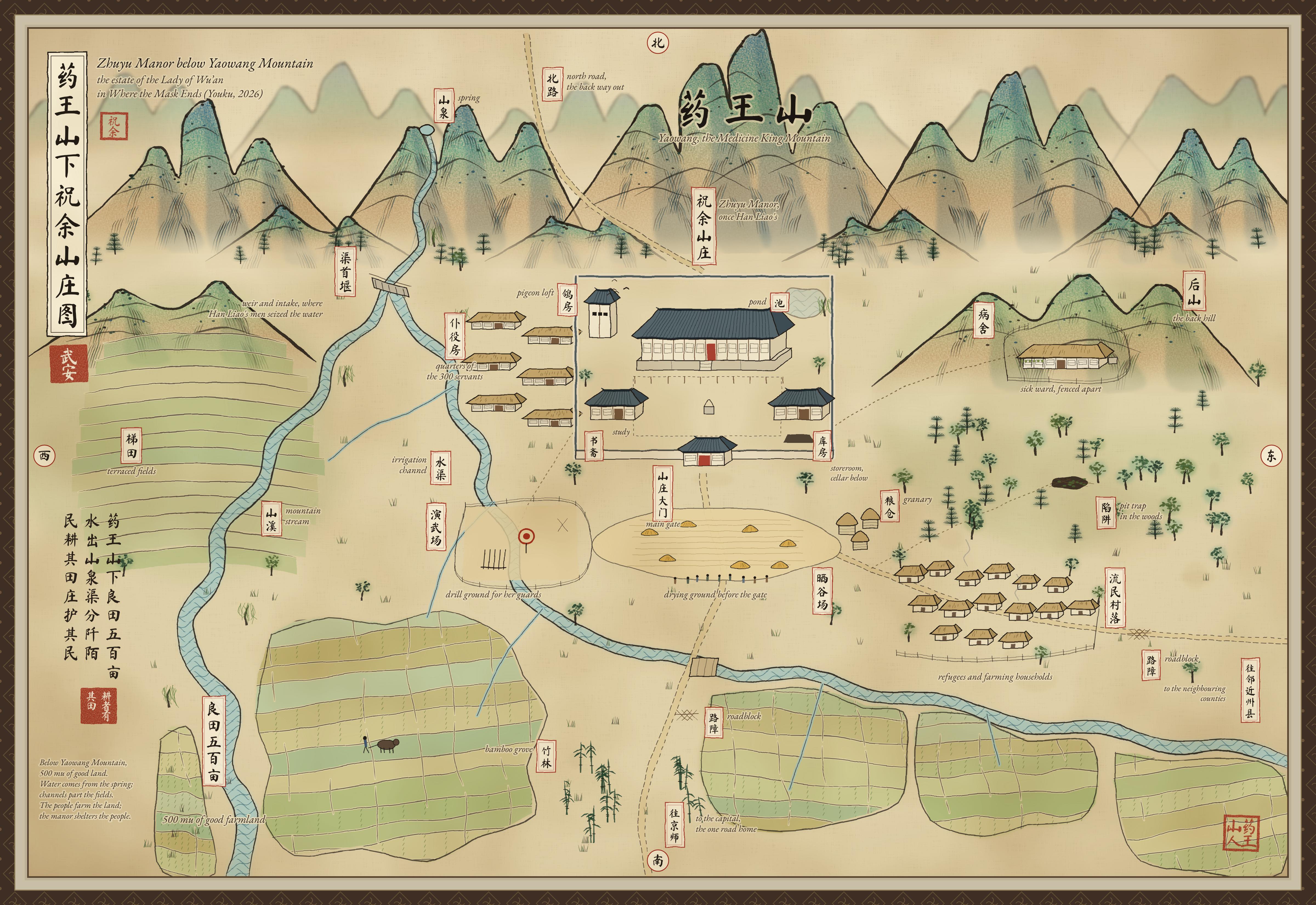 祝余山庄 The estate below Yaowang Mountain, painted. Choose any place.
半分钟Meet the story in 30 seconds
Where the Mask Ends (嫁金钗) is a 30-episode drama from Youku, 2026, also on Netflix. Everything else, you can find on the map.
舆图The maps
The show never shows a map of the estate, so this one is painted from the plot and the stills, in the manner of old Chinese county maps. Choose a place to read what happens there.
Hold Ctrl (or ⌘) and scroll to zoom, or open the map full screen
On the map: plus and minus zoom, arrow keys move, 0 shows the whole map, F toggles full screen.
Numbers follow the story. Zoom with + and −, drag to move, or use the list below. Tab reaches every place.
Places on this map
The map data could not be loaded. Try opening the site through a local web server.
Choose a place
Select a marker on the map or a name in the list. Each place shows what happens there, stills from the show, its themes, a line from the Chinese classics, and the real history it echoes.
Or start the story tour to walk the map in order.
历史回声Echoes in history
Land taken, land returned, land worked by people who could not own it. These eleven moments from China, Taiwan and California are echoes of the story's themes. The drama never refers to any of them.
守土El Sereno: the same fight, in Los Angeles
This project began in El Sereno, a mostly Latino neighbourhood in northeast Los Angeles where our class did fieldwork. There the question on the first screen is not history. The state bought hundreds of homes for a freeway it never built, and for fifty years neighbours have fought over who gets to live on that land, garden it and keep it. Each pair below puts a moment from the show beside a place in El Sereno.
El Sereno, year by year
四题Four themes
Each theme is read through older Chinese ideas about land and rule. The drama is set in an invented dynasty and does not quote these texts; the lines are here as echoes, not as claims about what the show means.
剧照Stills from the show
Every still on this site, in story order. Choose one to open its place on the map.
你的土地What land near you has a story like this?
Somewhere near you, land was taken, given back, worked by people who could not own it, or defended by the people living on it. A street renamed, a farm sold in a hurry, a building saved by its tenants.
- Who held the deed?
- Who did the work?
- Who decided, and who pushed back?
跋About and sources
Who this is for
People who have never seen the show: classmates, and Asian American readers who know some of this history from their own families. Fans of the drama are welcome too. The show is the door in; the land is what the site is about.
How the maps were made
Where the Mask Ends has no official map of Wei Rao's estate, so this one is reasoned from the story. Water comes off Yaowang Mountain, so the channel's intake sits at the top of the estate, where cutting it would kill every field below. The procession that tramples the drying grain comes in by the one road from the capital, so the drying ground sits before the main gate. The north road is a back way out, the sick ward stands apart on the back hill, and the pit is in the woods the fleeing crown prince is driven into. The look of the buildings comes from the stills.
The painting follows Chinese map traditions: blue-green mountains after Wang Ximeng's A Thousand Li of Rivers and Mountains (1113), wave-line water and labels in narrow slips after Ming and Qing painted county maps, buildings in ruled-line oblique view after Along the River During the Qingming Festival, and the capital's walled grid after the Song stele map of Pingjiang (1229). North is at the top, as on the Pingjiang map.
The capital map shows how the story's city places relate, not the plan of a real city. The echoes map uses Natural Earth coastlines; its rivers and ranges are drawn by hand.
Sources
- Episode synopses: TV Mao (Chinese), the HK01 episode guide (Chinese), and English recaps at wherethemaskends.com.
- Cast and characters: Chinese Wikipedia, 嫁金钗.
- Episode previews and screenshots: Sohu entertainment pages; Tencent News reviews; HK01.
- Map traditions: Wikimedia Commons, A Thousand Li of Rivers and Mountains, Map of Jiangxi Province with Explanations (Ming, National Library of China), Along the River During the Qingming Festival, and 平江图.
- Echoes in history: each entry lists its own sources.
- Classical texts: Mencius, the Analects, Xunzi, Han Feizi, the Guoyu and the Book of Rites. All translations on this site are our own.


Credits
- Stills: Where the Mask Ends, Youku 2026. Official stills and episode screenshots via TMDB, Sohu, Tencent News and HK01, used for commentary.
- Coastlines: Natural Earth (public domain). El Sereno streets, freeways and rivers: US Census Bureau TIGER/Line 2023 (public domain).
- El Sereno photos: our own fieldwork, 2026. Interviews from that fieldwork are not on this site.
- Fonts: Ma Shan Zheng, Noto Serif SC and EB Garamond, from Google Fonts.
- Maps painted for this site.
This is an unofficial, non-commercial project for a class. It is not connected to Youku or the production.